
How to behave in the forest?
Video: How to behave in the forest
Video: Preparing for your trip
Video: An encounter with a bear
Video: Bear attacks
Video: Using bear spray
Video: Bears in inhabited areas
Note:
The videos provided are educational in nature and are intended to inform the public about the principles of safe behavior and coexistence between people and large carnivores, particularly the brown bear. They are not professional film productions, but authentic footage and real-life situations intended to present practical experience and raise awareness of conflict prevention. Source of photographs and videos: Archive of the State Nature Conservancy of the Slovak Republic, Intervention Teams of the State Nature Conservancy of the Slovak Republic, and National Park Intervention Teams. Produced by: Department of Communications and Public Relations, SNC SR.
When spending time in nature, it is important to take preventive measures and act responsibly. By following a few simple rules, you can significantly reduce the risk of encountering a bear. These precautions are the most effective way to prevent conflicts and are essential for staying safe in areas where brown bears are present.
- Plan your timing. Avoid being out at dawn, dusk and night, when bears are most active.
- Make your presence known. Talk, sing or clap your hands from time to time – a bear is more likely to avoid you if it knows you are there.
- Stick to marked trails. Venturing off the trail increases the risk of surprising an animal.
- There is safety in numbers. A larger group of people acts as a deterrent.
- Always keep your dog on a leash. A dog running loose may provoke a bear and draw it towards you.
- Do not leave food scraps behind. Waste and food odours attract wildlife and increase the risk of conflict.
- Watch for signs of bear presence. Fresh tracks, scat, dug-up anthills or claw-marked trees indicate that a bear is in the area.
- Be extra cautious in dense vegetation, near water and in areas with poor visibility. Sudden encounters can occur in these places.
- Keep away from animal carcasses and food caches. A bear may defend its food aggressively.
- Cubs are not there to be played with. If you see a bear cub, leave the area immediately – the mother bear will be close by.
- Take particular care near noisy streams or in strong wind. These sounds may mask your presence.
- If you spot a bear, stay calm. Do not run — give the bear space to retreat, and back away slowly.
- Stay alert all year round, including in winter. Bears are active during the winter months too.
- Never approach a bear and never try to photograph one at close range.
Before entering the forest, take a few minutes to prepare.
- Check the current situation in the area. Find out whether any bear sightings have been reported there, or whether any restrictions are in force.
- Take a fully charged mobile phone with you.
- Save the telephone number of the relevant Bear Response Team.
- Download the Mountain Rescue Service app.
- Take bear spray with you and keep it within immediate reach at all times. Do not carry it packed away in your rucksack.
- Do not go alone into high-risk areas; it is safer to travel in a group.
- Do not enter areas where access is not recommended. These are marked with information and warning signs, which also indicate that the area is monitored by camera traps.
Photo Gallery
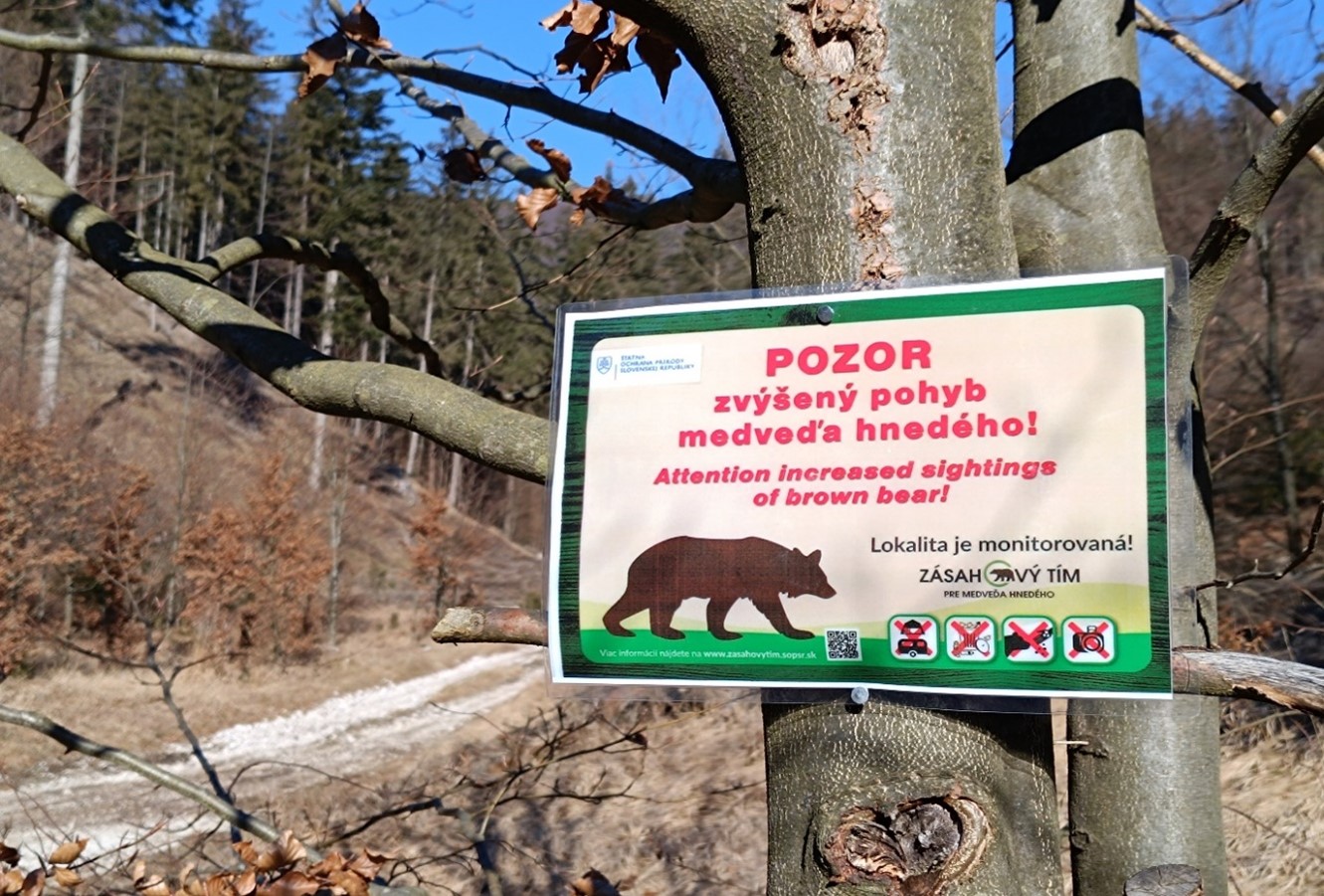
Source: Intervention Team Fatra
- Make a moderate amount of noise – even a loud conversation will do.
- Avoid dense vegetation.
- Do not leave behind waste or food scraps.
- Keep away from animal carcasses.
- Stay aware of your surroundings.
Photo gallery
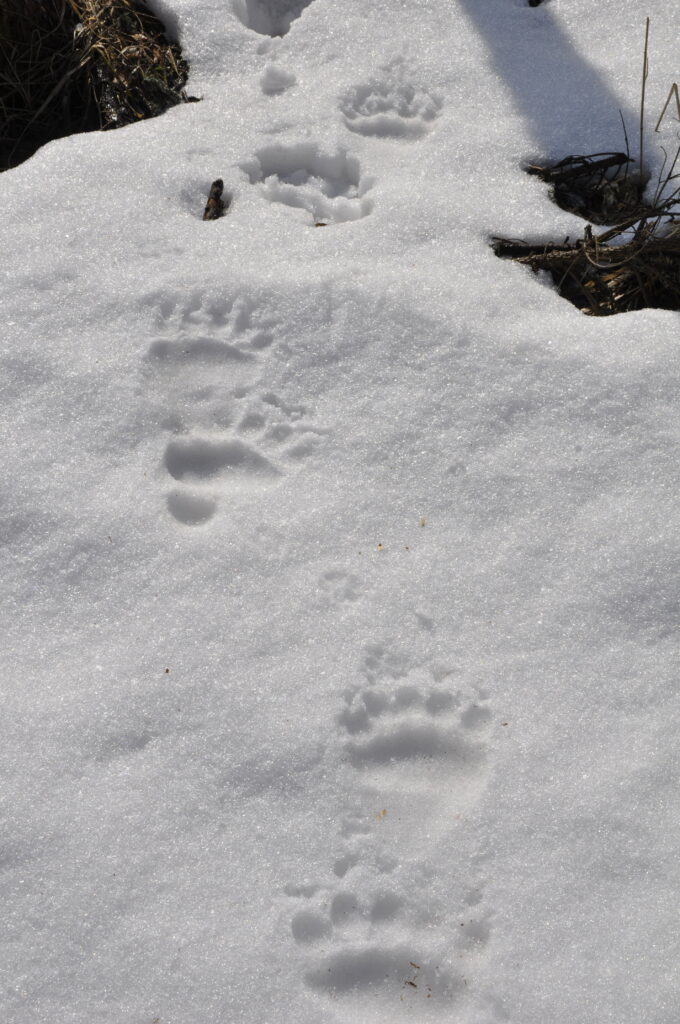
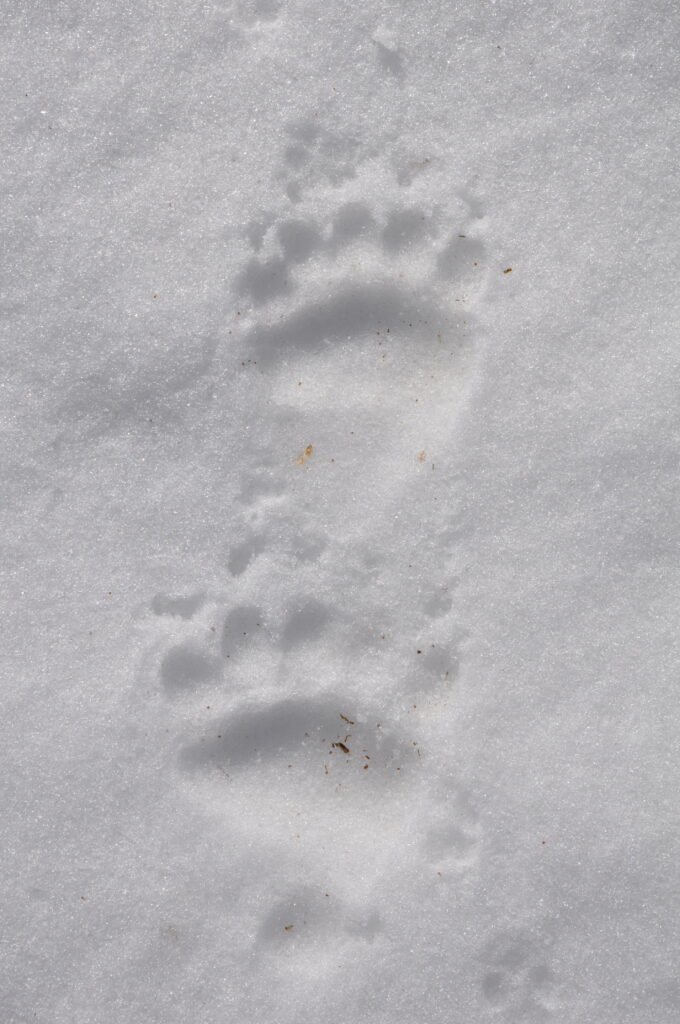
An encounter with a bear is an unpredictable situation. The key is to stay calm and assess the situation correctly. React according to whether the bear is aware of you and how far away it is:
1. Seeing a brown bear from a distance
The bear has not noticed you yet
- Do not take any risks and do not attempt to take photographs.
- Quietly and discreetly retrace your steps.
- Give the bear plenty of space so that it can move away undisturbed.
The bear has noticed you
- Speak to it calmly, so that it recognizes you as a person and not as another bear or as prey.
- Back away slowly and smoothly, without any sudden movements.
- Do not look the bear directly in the eyes, as it may perceive this as a threat.
- If the bear rears up on its hind legs, this is not an attack. It is simply assessing the situation using its sense of smell and sight.
2. Close encounter
At this point your aim is to show that you are not a threat and that you intend to move away.
- Identify yourself by speaking, so that the bear recognizes you as a person and not as another bear or as prey.
- Avoid eye contact. A direct stare may trigger a defensive reaction.
- Do not run. Running may trigger the bear’s instinct to chase.
- Do not turn your back on the bear; back away slowly and in a controlled manner.
- Bluff charge
The bear may suddenly charge towards you at speed but stop short just in front of you, slap the ground with its front paws or growl, and then run off. This is a warning. Stay calm and back away once the bear retreats.
3. A direct attack
How to minimize the consequences
If an attack occurs, the aim is to protect your vital organs and convince the bear that you are not a threat.
- Use bear spray if you have it.
- Recommended spraying distance: 5–10 meters
- Aim slightly downward toward the bear’s face to create a protective cloud between you and the bear.
- Assume a defensive position
- Lie face down.
- Use your fingers to protect the back of your neck and your elbows to protect your face.
- A rucksack on your back can serve as a shield.
- Remain still — “play dead”
- Once the bear realizes that you are not a threat, it will usually stop attacking.
- After it has left, remain motionless for several more minutes.
Bear spray is designed to stop aggressive behavior in wildlife. The active substance, capsaicin, causes severe irritation of the eyes and respiratory tract, resulting in temporary impairment of vision, difficulty breathing and disorientation in the animal. This usually interrupts the attack and reduces the animal’s ability to continue behaving aggressively.
Operating instructions and handling:
- Accessibility: Keep the spray where it can be used immediately – within immediate reach.
- Activation: If you are threatened, grip the canister firmly in your hand and use your thumb to pull the safety clip towards you and remove it.
- Aiming: Aim the spray slightly downwards at the approaching bear, ideally at a distance of at least 12 meters.
- Discharge: Press the trigger briefly but fully to create a protective barrier in the form of an aerosol cloud. If the bear remains aggressive after passing through the cloud, hold the trigger down continuously and direct the stream at its head. (The range of the spray is 7–10 meters, depending on weather conditions. With the trigger fully depressed, the total discharge time is approximately six seconds or more.) When the irritant aerosol reaches the target area, it causes temporary disorientation and loss of vision in the bear and stops the attack, giving you the time you need to leave the danger zone safely.
- Leaving the area: Once the threat has been averted, leave the site immediately, including the wider surrounding area.
If a person is accidentally exposed to bear spray, follow these steps:
- Leave the affected area and move to fresh air. Remove contaminated clothing as soon as possible to prevent the active substance from spreading further onto the skin.
- Clean the skin by rinsing thoroughly with lukewarm water and soap for approximately 10–15 minutes. This will remove any residue of the active substance.
- Rinse the eyes with clean water. Do not rub the eyes, as this will cause further irritation. Gentle, prolonged rinsing with water is the most effective approach.
- A specialized decontamination product may be used to alleviate the effects, if available.
- Seek medical attention if eye or skin irritation, or breathing difficulties, persist or worsen.
Storage and disposal:
- Storage: Do not expose the spray to extreme temperatures (e.g. in a vehicle), direct sunlight or prolonged freezing.
- Safety: Keep out of the reach of children.
- Inspection: Before use, check that the canister is intact and check the expiry date.
- Disposal: Dispose of empty or unusable canisters in accordance with regulations on the disposal of hazardous waste.